

How To Clean Line From Condensate Pump
How to Replace an Air conditioning System's Condensate Pump
Bert spent 25 years working as a abode-improvement and residential construction contractor in key Florida.
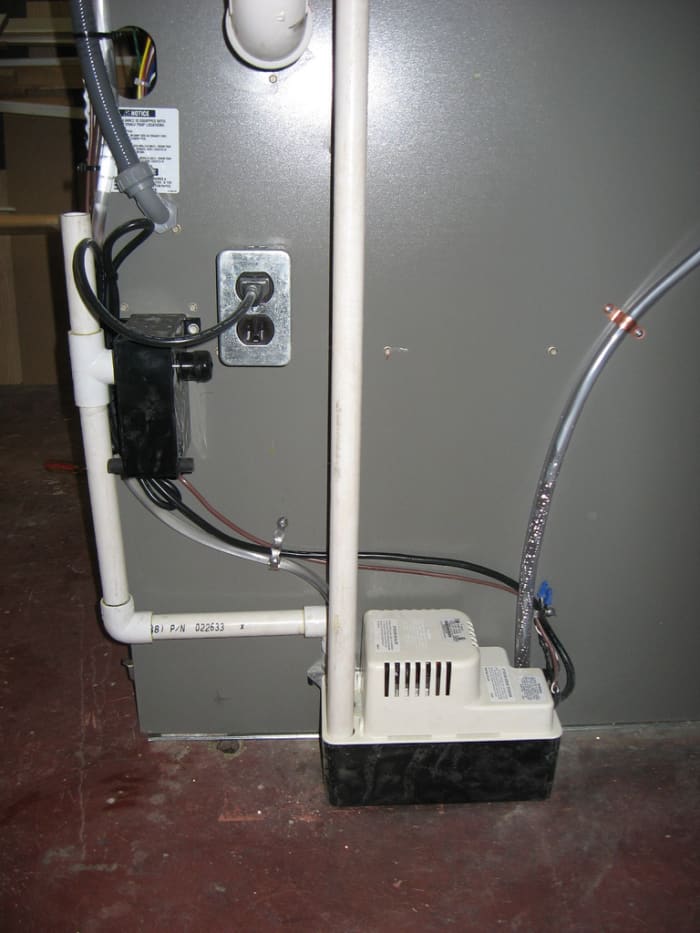
The condensate pump on an air conditioning system usually runs for many years without whatsoever major issues. Unfortunately, when the pump fails, information technology often happens unexpectedly and at the worst time, such as after work on a hot summertime day when a professional service technician charges "emergency" or "after-hours" rates. An experienced technician starts the service call investigating the about common trouble areas, which includes the condensate-drain organization. If the condensate pump failed, the air-conditioning system would continue to dump condensate into the holding tank until the h2o level activates the pump'southward safety switch.
https://www.flickr.com/photos/activesteve/
Troubleshoot the Existing Condensate Pump
Before spending unnecessary money on a new condensate pump, troubleshoot the old pump. Sometimes information technology only takes a simple fix to restore the pump to working order. Slowly pour water into the holding tank until information technology activates the pump-motor's float switch or the property tank overflows.
- Check the electrical circuitry: If the pump motor failed to turn on, audit the fuse. The fuse protects depression-voltage circuitry from catastrophic failure. If the fuse shorted, inspect the wiring for damaged insulation or an exposed conductor, and gear up as necessary with electrical tape. Supersede a diddled fuse with an verbal match; never increase the fuse'southward amperage rating. If the fuse checks out but the pump even so fails to energize, check the high-voltage connection for proper voltage.
- Inspect the pump motor'south actuator: If the pump motor failed to turn on or remained energized after it removed all condensate from the holding tank, you tin can suspect water-deposit buildup on the pump'southward actuator. Occasionally cleaning water deposits from a stuck actuator temporarily fixes the pump. Nonetheless, the buildup on the actuator normally interferes with its actuator within a brusk amount of fourth dimension. Open the pump's holding tank and remove sludge and h2o deposits.
- Examine the discharge tubing: If the pump motor energized but did non evacuate the property tank, suspect a clogged bleed line. This often happens subsequently the air conditioning system remained off for an extended menses of time. Sludge forms in the stagnate h2o contained inside the holding tank. When the pump motor turns on, information technology pulls the sludge out of the tank and forces it into the discharge tubing. Occasionally large pieces of sludge create a damn in a sharp curve or where two pieces of tubing meet. To remedy a clogged condensate drain, simply disconnect the drain line from the pump'south discharge port and blow compressed air through the tubing. Placing a condensate drain cleaning tab in the pump housing during the system'southward yearly preventive maintenance checkup inhibits sludge buildup, which lessens the likelihood of this problem occurring in the future.
Disconnect the Electricity
- Turn off the circuit breaker with the "Furnace" or "Air Handler" label: This disconnects the electricity, preventing accidental electrical shorts and keeps the technician safe. Go along it off for the entire process.
- Disconnect the old condensate pump from its loftier-voltage electrical source: Many systems plug into a standard 120-volt GFCI-protected wall receptacle located on or near the furnace. If so, simply pull the plug from the receptacle. Occasionally, the pump motor hardwires straight into the furnace's high-voltage terminal block. If so, accept note of the wire connections for hereafter reference, then disconnect the wiring.
- Disconnect the condensate pump's low-voltage circuitry: The condensate pump's loftier-water safety switch connects in series with the furnace's thermostat circuitry. The connection method depends on the model. Follow the thin-gauge 2-strand wire set up exiting the furnace toward the condensate pump. Some models use exposed wire nuts, while others need the condensate pump's electrical compartment opened to access the connections.
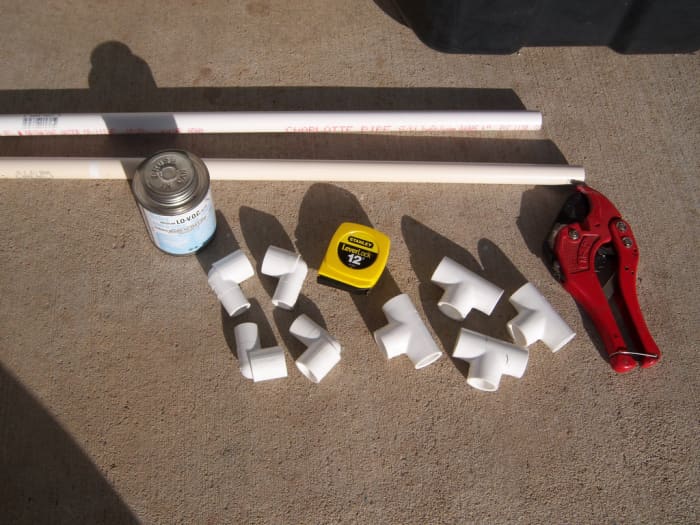
Many systems utilise 3/4-inch pvc piping every bit a furnace or air conditioning drain.
https://world wide web.flickr.com/photos/dsoltesz/
Remove the Quondam Condensate Pump
- Remove the discharge tubing: Loosen the clamp securing the discharge tube to the pump's spinous discharge plumbing equipment, using the appropriate tool. Some pumps apply hose clamps requiring a slotted screwdriver, while others use a compression clamp that squeezes together with pliers. Grip the pump housing with ane hand and the discharge tubing with the other. Twist the tubing back and along while pulling it off the fitting.
- Disconnect the air-conditioning and furnace drains: If the condensate pump sits on a movable support, slide the support abroad and lower the pump. The drain pipes from the air conditioner or furnace will slide out of their respective pump-housing intake ports. If the pump sits on the floor or another unmovable surface, cut the drain pipes about six inches up from the pump housing. Elevator the furnace drain pipage out of the condensate pump's intake port. Save the short pieces of pipage for reinstallation.
- Remove the sometime furnace condensate pump: Disconnect any mounting brackets using the appropriate screwdriver. Discard the old unit.
Read More than From Dengarden
Prepare the Discharge Tubing
- Audit the discharge tubing: Visually inspect the vinyl discharge tubing connected to the pump motor; look for worn areas. Pay detail attention to the areas where the tubing touches other objects, such as mounting clamps and the furnace itself. Supplant damaged tubing as needed.
- Flush the discharge tube: Make clean the discharge tubing with compressed air, using an air compressor, air tank, or every bit a last resort, a cycle pump. Attach the compressed-air tool to the bleed tube and apply air, removing all water and sludge. Continue to push air through the discharge tubing until the air flows freely. This removes all sludge buildup.
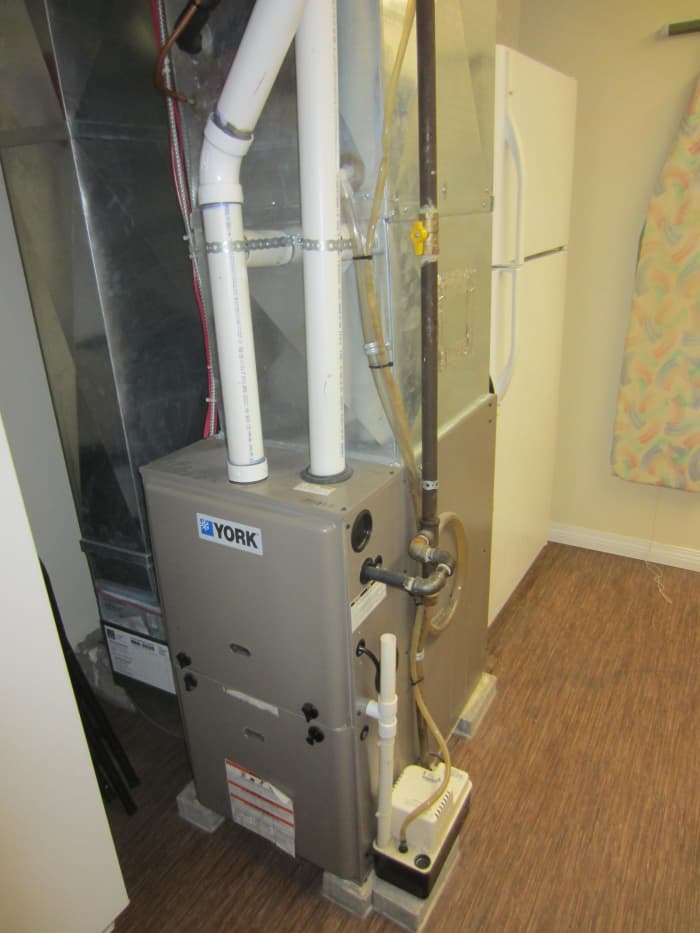
- Replace damaged tubing: If vibration created excessive vesture or an unmovable blockage prevented airflow, supersede the tubing. Unfortunately, this often requires fishing 1/4-inch inside-diameter tubing through an cranium or crawl space towards a suitable discharge area outside or to a nearby gravity-fed drain. When running the drain toward the outside, create a h2o trap in the tubing. Some technicians make a loop in the tubing about the pump equally a h2o trap, others course a large U-shape bend. Plain, a skilled technician avoids terminating a drain line above a doorway or window, and avoids spillage onto a walkway. When connecting to an existing drainage system, such as a sink or washing auto drain, the condensate must enter the bleed system upstream of the trap. When connecting to a sink drain, replace the sink drain'due south standard tailpiece with one equipped with a side port. Slip the end of the condensate pump's discharge tubing into the side port.
By Wtshymanski (Own piece of work) [CC BY-SA 4.0 (https://creativecommons.org/licenses/by-sa/4.0)], via Wikimedia Commons
Install the New Condensate Pump
- Prepare the new condensate pump: If the old condensate pump saturday direct on the flooring, consider lifting the pump off the ground with a brick or other support. The raised position makes hereafter preventive-maintenance servicing easier. With a raised platform, a technician simply slides the support out from under the pump, then lowers the pump without needing to cut the PVC bleed pipes from the furnace or air-conditioning gyre.
- Connect the air conditioning and furnace drains to the condensate pump: If the pump housing sits on a raised platform, position the finish of the air conditioning and furnace bleed pipes within their respective intake ports on the pump housing, gear up the pump in place and supplant the platform support. If the technician cut the drain piping while removing the old pump, position the drain opening in the pump housing directly beneath the existing bleed pipe. Slip the small cut piece into the intake port and splice the two pieces together with a coupling. Echo this for the furnace drain, when applicative.
- Attach the discharge tubing: Force the cease of the discharge tube onto the condensate pump'due south spinous belch fitting. The stop of the discharge tube must completely comprehend all of the discharge plumbing fixtures'due south barbs. Position the clamp on the belch tubing near i/8 inch from the cease of the belch tube. The clamp locks the discharge tube against the pump housing'due south discharge plumbing fixtures.
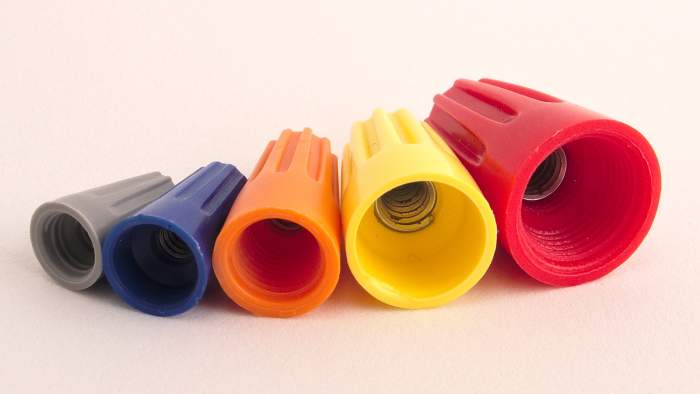
Wire nuts protect electrical connections from adventitious shorts.
Brand the Electrical Connections
- Attach the depression-voltage circuit: Connect the condensate pump's prophylactic switch to the furnace's low-voltage wire set up. The open up-or-closed nature of this switch makes these wire connections interchangeable. If the pump model uses exposed wire leads, only twist one of the condensate pump'due south condom switch wire strands around one of the furnace'southward low-voltage wire strands. Protect the connection with a wire nut. Repeat this with the 2d wire grouping. If the unit uses a contained electric compartment, open the compartment with the advisable screwdriver. Fish the furnace's low-voltage wire into the compartment through the wire-admission hole, make the electrical connections, then close the compartment.
- Make the condensate pump's high-voltage connectedness: Many units come up from the manufacturer with a 3-prong 120-volt plug fastened to the stop of the high-voltage cord. Either push this plug into a wall receptacle or cut the plug off and difficult wire the pump motor'south wire set into the furnace's terminal block, using the notes taken during disassembly as a guide. Flip the furnace's circuit breaker to the "On" position.
Test the New Condensate Pump
Pour water into the pump'due south holding tank. Eventually the rising water should lift the float switch and turn on the pump motor. A properly working condensate pump removes a significant corporeality of water from the property tank earlier cycling off. This process takes less than 30 seconds. If the motor fails to plough on, check each electrical connexion for solid contact and proper voltage.
Placing a condensate drain cleaner tablet in the pump's belongings tank prevents sludge buildup. I have used SimpleAir Drain Line tablets in my ac system. I place a couple tablets in the air conditioner'southward drip pan every spring. Throughout the yr, they slowly dissolve, limiting algae buildup in the drain line.
This article is accurate and true to the best of the writer's cognition. Content is for informational or entertainment purposes simply and does non substitute for personal counsel or professional communication in business, fiscal, legal, or technical matters.
© 2022 Bert Holopaw
Related Articles

Source: https://dengarden.com/appliances/How-to-Replace-an-Air-Conditioning-Systems-Condensate-Pump
Posted by: ashbeills81.blogspot.com
0 Response to "How To Clean Line From Condensate Pump"
Post a Comment